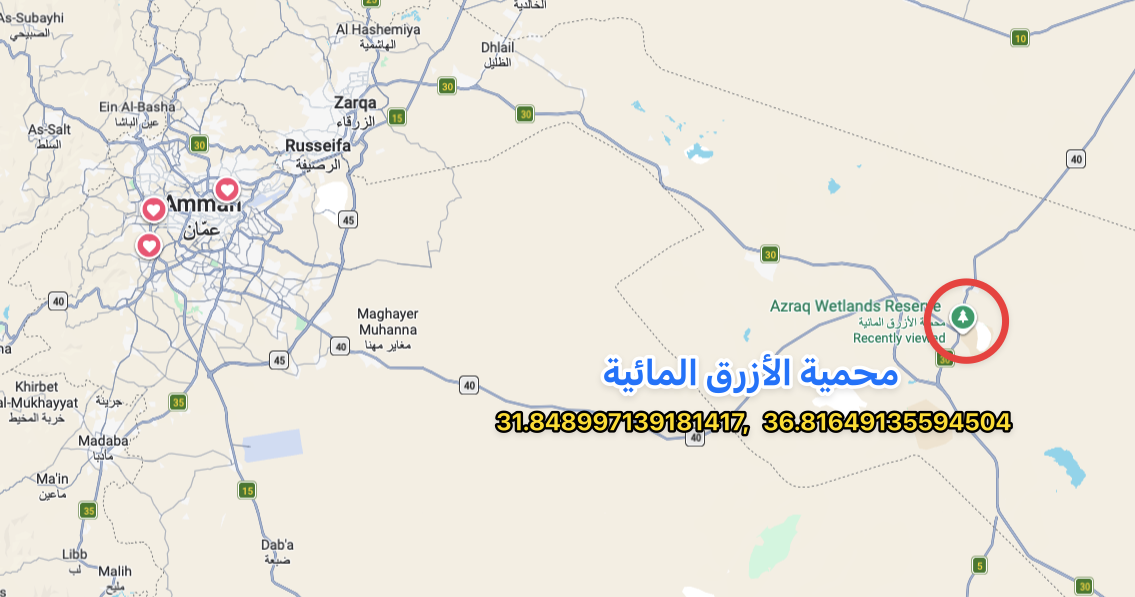

Azraq is a unique wetland, located in the heart of the arid Eastern Desert, which takes its name from the Arabic word for ‘blue’. A migratory stopover for birds from three continents, Azraq is becoming increasingly popular for bird watching. From the walkways and hides, visitors get the chance to observe birds close at hand, including local, migratory and occasional rare species.
The Azraq area also has a rich cultural history due to its strategic location and water resources. It was used as a station for pilgrims and camel trains and Lawrence of Arabia was stationed in Azraq Castle during the Arab Revolt.
The local people are also unusually diverse, coming from three different ethnic origins, Bedouin, Chechen and Druze; each of which has distinctive beliefs and traditions. Bedouins have lived a nomadic life style in the area for generations, whereas the Chechens are descendants of settlers from the Caucasus and the Druze stem from Arab tribes in Syria and Lebanon.
يُعدّ الأزرق منطقة رطبة فريدة من نوعها، تقع في قلب الصحراء الشرقية القاحلة، وقد استمدت اسمها من الكلمة العربية التي تعني "الأزرق". ويُشكّل الأزرق محطة توقف للطيور المهاجرة من ثلاث قارات، ما يجعله وجهةً متزايدة الشعبية لمراقبة الطيور. ومن خلال الممرات وأماكن المراقبة، يُتاح للزوار فرصة مشاهدة الطيور عن قرب، بما في ذلك الأنواع المحلية والمهاجرة، بالإضافة إلى الأنواع النادرة التي تُشاهد أحيانًا
تتمتع منطقة الأزرق أيضًا بتاريخ ثقافي غني نظرًا لموقعها الاستراتيجي ومواردها المائية. تم استخدامه كمحطة للحجاج وقطارات الجمال، وكان لورنس العرب متمركزًا في قلعة الأزرق أثناء الثورة العربية
كما أن السكان المحليين متنوعون بشكل غير عادي، حيث يأتون من ثلاثة أصول عرقية مختلفة، البدو والشيشان والدروز. ولكل منها معتقدات وتقاليد مميزة. لقد عاش البدو أسلوب حياة بدوية في المنطقة لعدة أجيال، في حين أن الشيشان ينحدرون من نسل المستوطنين من القوقاز والدروز ينحدرون من القبائل العربية في سوريا ولبنان