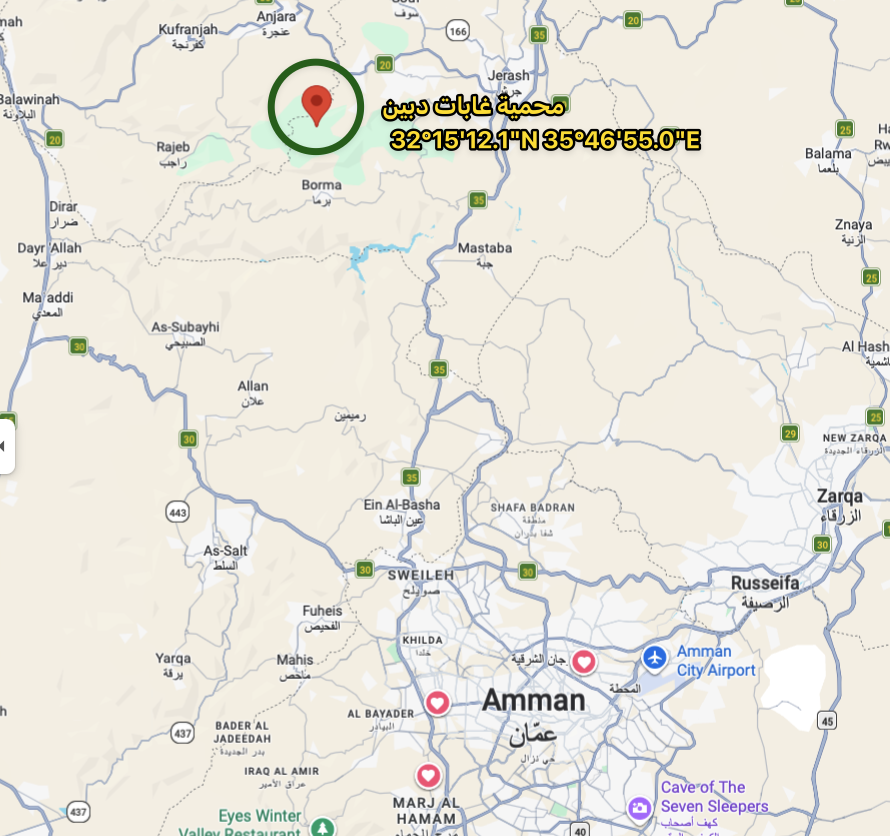

In 2004, RSCN established its latest nature reserve in Dibeen Forest northern Jordan. Dibeen Forest Reserve extends over 8.5 km2 of mountainous terrain, covering an area of pristine pine-oak habitat (Pinus halipensis-Quercus calliprinos).
These Aleppo pines are some of the oldest and largest in the Kingdom, and are the defining characteristic of this landscape, representing the southeastern geographical limit of this forest type. Dibeen is the driest part of the world in which the Aleppo pines are known to grow naturally, with an average rainfall of around 400mm per year.
Dibeen was ranked as the top priority site for conservation in the 1998 Protected Areas review, after being overlooked in the original 1979 review, as studies have revealed that Dibeen is one of the best remaining examples of the original pine-oak forest cover in the region and supports at least 17 threatened species, like the Persian Squirrel, and other globally significant biodiversity
في عام ٢٠٠٤، أنشأت الجمعية الملكية لحماية الطبيعة أحدث محمياتها الطبيعية في غابة دبين شمال الأردن. تمتد محمية غابة دبين على مساحة ٨٫٥ كيلومتر مربع من التضاريس الجبلية، وتغطي منطقة من موطن أشجار الصنوبر والبلوط البكر (Pinus halipensis-Quercus calliprinos)
عدّ أشجار الصنوبر الحلبي من أقدم وأكبر الأشجار في المملكة، وهي السمة المميزة لهذه المنطقة، إذ تمثل الحد الجغرافي الجنوبي الشرقي لهذا النوع من الغابات. وتُعتبر دبين المنطقة الأكثر جفافًا في العالم التي تنمو فيها أشجار الصنوبر الحلبي بشكل طبيعي، حيث يبلغ متوسط هطول الأمطار فيها حوالي ٤٠٠ مليمتر سنويًا
صُنّفت دبين كأهم موقع ذي أولوية قصوى للحماية في مراجعة المناطق المحمية لعام ١٩٩٨، بعد أن تم تجاهلها في المراجعة الأصلية لعام ١٩٧٩، حيث كشفت الدراسات أن دبين تُعدّ من أفضل الأمثلة المتبقية على غطاء غابات الصنوبر والبلوط الأصلي في المنطقة، وتدعم ما لا يقل عن ١٧ نوعًا مهددًا بالانقراض، مثل السنجاب الفارسي، بالإضافة إلى تنوع بيولوجي آخر ذي أهمية عالمية